

Getting your visa approved feels amazing.
You may have spent weeks preparing documents, filling out forms, paying fees, attending an appointment, and waiting for a decision. During that time, you probably checked your email more times than you would like to admit.
Then finally, you get the news you’ve been waiting for:
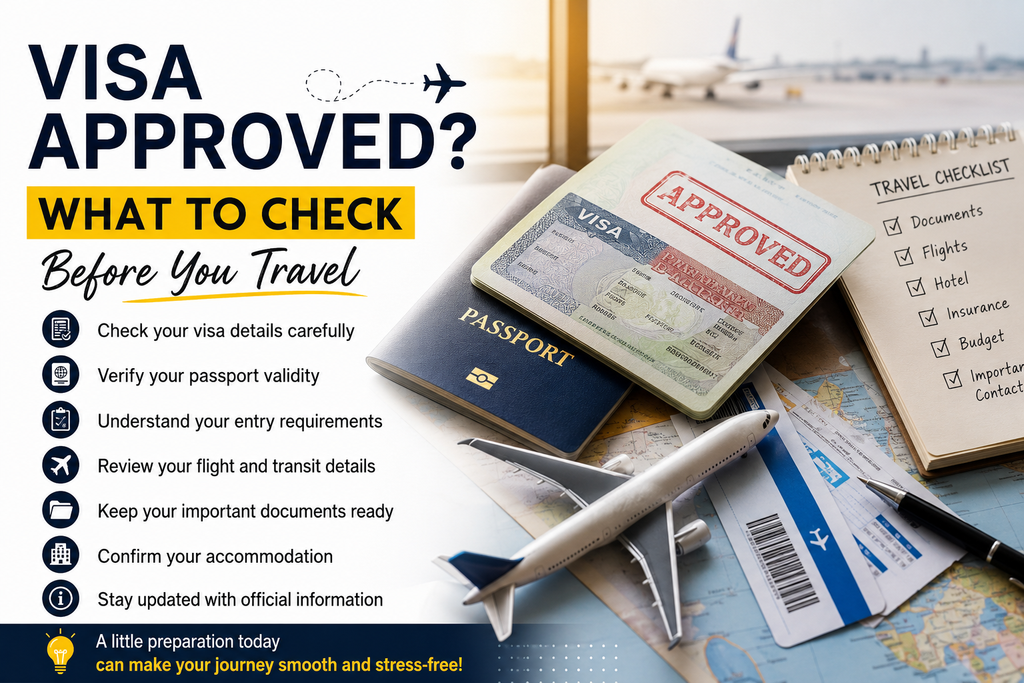
At that moment, most people start thinking about one thing — booking the flight.
And that’s understandable. After all the waiting, you just want to get everything done and start preparing for your trip.
But before you rush to buy your ticket, take a little time to check a few important things.
A visa approval is a big step, but it doesn’t mean you should stop checking the details. Your passport, visa conditions, flight route and entry requirements still matter.
Here are some things I would personally check before leaving for another country.
First, Take a Good Look at Your Visa
When you receive your passport back, don’t simply see the visa and put your passport somewhere safe.
Read it.
Check the name, passport number, date of birth and visa category. Look at the dates as well.
If your visa contains information about the number of entries you can make, make sure you understand that too.
It only takes a few minutes to check everything.
If something doesn’t look right, contact the embassy, consulate or immigration authority responsible for your visa. It’s much easier to ask about a possible mistake while you’re still at home than after you’ve already reached the airport.
Your Passport Still Matters
Getting a visa doesn’t mean you can forget about your passport.
Take another look at its expiry date and condition before making your travel arrangements.
Different countries have different passport requirements. Some countries want your passport to remain valid for a certain amount of time after you arrive.
This is why simply saying, “My passport hasn’t expired yet,” isn’t always enough.
Check the actual rules for your destination.
Also make sure the passport number on your visa is the same as the passport you’re planning to use for your journey.
If you have recently renewed your passport, don’t make assumptions about how an older visa should be used. Check the official instructions for your destination.
Don’t Get Confused About Visa Expiry
This is something that catches many first-time travelers by surprise.
A visa’s expiry date doesn’t necessarily tell you how long you can stay in a country.
These are two different things.
The rules depend on the country and the type of visa you have. In the United States, for example, the Department of State explains that the visa validity period and the period you’re allowed to remain in the country are not the same. A visa allows you to travel to a U.S. port of entry and ask for admission; the actual admission and authorized stay are determined by immigration authorities.
So if you see a visa that is valid for several years, don’t automatically assume you can stay there for several years.
Read the conditions that apply to your particular visa.
Now Start Looking at Flights — But Don’t Look Only at the Price
This is where the excitement really starts.
You open a flight website, enter your destination and start comparing prices.
There’s nothing wrong with looking for a good deal. Most of us do exactly that.
But don’t choose a flight just because it is the cheapest one.
Look at the entire route.
A cheaper ticket might have a very long layover. It might involve changing airports. It could be made up of separate tickets. Or you might have to transit through a country where you need additional permission.
For example, suppose you’re flying:
Pakistan → Dubai → United States
You obviously need to think about your U.S. visa, but you should also understand what happens during your connection in Dubai.
Will you stay inside the transit area?
Will your luggage be transferred?
Do you need to go through immigration?
The answer can depend on the airline, airport, ticket and your nationality.
A Long Layover Isn’t Always a Bad Thing
People often try to find the shortest possible connection.
Sometimes that’s fine.
But if you’re traveling internationally for the first time, a little extra time between flights can actually make life easier.
Airports can be huge. You might have to walk to another terminal, go through security again or wait for your luggage.
And if your first flight is late, a very short connection can become stressful very quickly.
Instead of asking only:
“How short can I make my layover?”
ask:
“Is this connection realistic for me?”
There’s no prize for spending your trip running through an airport.
Be Extra Careful With Separate Tickets
This is one of those things that looks like a great money-saving trick until something goes wrong.
You might find one cheap flight to a major airport and another cheap flight from that airport to your final destination.
The total price looks fantastic.
But now you have two separate bookings.
What happens if the first flight is delayed?
What happens to your checked luggage?
Do you need to collect it?
Will you have to check in again?
Will you have to pass through immigration?
These questions matter.
A connection on one booking can be very different from a connection made using two separate tickets.
If you decide to book separately, understand exactly what you’re getting into before you pay.
Find Out What Happens to Your Luggage
Here’s a simple question that is worth asking your airline:
“Will my checked bag go all the way to my final destination?”
Don’t just assume the answer is yes.
If you need to collect your luggage during a connection, you may have to leave the secure part of the airport and check in again.
That could change the way your transit works.
This becomes particularly important if you’re connecting through another country.
Knowing the baggage arrangements before your trip can save you a lot of confusion when you land.
Keep Your Important Papers Somewhere Safe
After your visa is approved, start organizing your documents.
You don’t need a complicated system.
A simple folder is enough.
Keep your passport and visa together with the documents relevant to your trip. Depending on why you’re traveling, that could include a hotel confirmation, return or onward ticket, university admission letter, invitation letter, employment documents or travel insurance.
You won’t necessarily need every document at every stage.
But it’s better to know where your important papers are than to search through your phone while standing at an airport counter.
Make Copies of Your Documents
Before you leave, make secure copies of your important documents.
At the very least, consider keeping a copy of your passport’s main information page and your visa.
You can also save copies of your flight booking, accommodation details and other important paperwork.
Try to keep these copies somewhere secure and accessible even if you don’t have internet.
At the same time, be careful with your personal information.
Your passport contains sensitive details.
If someone online asks you to send your passport, bank statement or other documents, make sure you know who they are and why they need them.
Be particularly cautious about anyone promising to “guarantee” your visa or entry.
Check Where You’re Staying
This sounds like a small thing, but it becomes very important when you arrive.
Before your flight, make sure you know the address of your accommodation.
If you’re staying at a hotel, save the booking and address.
If you’re staying with a friend or relative, keep their full address and phone number available.
Students should keep their university or accommodation information handy.
Imagine arriving after a long international flight and realizing the address you need is buried somewhere inside an email you can’t open.
A little preparation at home makes that situation much easier.
Don’t Stop Checking Official Information
One of the biggest mistakes travelers make is assuming that the rules they checked when applying for the visa are the only rules they need to know.
Travel requirements can change.
That’s why it’s a good idea to check the official government or immigration website again before your departure.
Look for any updated information that applies to travelers from your country.
Depending on where you’re going, there could be additional requirements involving customs, health, travel declarations or other documents.
Social media can be useful for discovering information, but don’t use a random post as your final source for an important immigration decision.
For things that could affect your ability to travel, go back to the official source.
Think About Questions at Immigration
Some people become nervous about immigration because they imagine they’re going to be questioned for hours.
Usually, the best preparation is much simpler.
Know your own travel plans.
If you’re visiting someone, know where you’re staying and who you’re visiting.
If you’re a student, know the name of your university and your program.
If you’re traveling for work, understand the purpose of your trip and the relevant arrangements.
If you’re visiting as a tourist, be clear about your planned trip.
You don’t need to memorize a perfect speech.
Just be honest and make sure your answers match the information in your application.
For U.S. travel, the Department of State makes clear that having a visa doesn’t itself guarantee admission. A traveler uses the visa to travel to a U.S. port of entry and request admission, while U.S. Customs and Border Protection makes the admission decision.
That’s an important distinction for anyone planning international travel.
What If Your Plans Change?
Sometimes things change after a visa is approved.
Your university might move your start date. Your friend might change their address. You might find a different flight or decide to arrive on another date.
Some changes may be completely fine.
Others could matter depending on your visa and circumstances.
So don’t assume that an approved visa means every future change is automatically acceptable.
If you’ve changed something significant about your trip, check the official guidance before you travel.
Don’t Spend All Your Money Immediately
Visa approval can make you feel like everything is finally certain.
That’s when some people start booking hotels, flights, tours and everything else at once.
Try to slow down a little.
Before paying for expensive non-refundable bookings, read the cancellation and change policies.
A slightly more flexible booking can sometimes be worth considering, especially if your plans are not completely settled.
This doesn’t mean you need to spend more money than necessary.
It simply means you should know what you’re paying for.
The Week Before Your Flight
When your departure gets closer, do one final review.
Check your passport.
Check your visa.
Look at your flight details.
Confirm your accommodation.
Review your transit route.
Make sure you have the documents you need.
Check the latest official entry information.
Also check your airline’s baggage allowance so you don’t discover an unexpected problem at the airport.
If someone is picking you up, confirm the arrangements with them.
None of this is complicated.
It is simply about being prepared.
What Should You Keep in Your Hand Luggage?
Your passport should always stay with you rather than being placed inside checked luggage.
The same goes for other essential documents you may need during the journey.
Keep your phone charged and have your important booking information accessible.
If you take regular medication, make sure you’ve prepared it properly for the journey and checked any relevant rules for your destination.
A little planning for your hand luggage can make a surprisingly big difference during a long trip.
One More Thing: Don’t Panic If Something Unexpected Happens
International travel doesn’t always go exactly according to plan.
Flights get delayed.
Gates change.
Connections get moved.
Sometimes airport staff ask questions you weren’t expecting.
If something goes wrong, try not to panic.
Listen carefully, ask questions and deal with one problem at a time.
Having your documents organized makes this much easier.
And if you don’t understand something related to immigration or your visa, ask the relevant official rather than relying on a stranger’s advice.
Final Thoughts
Getting your visa approved is a big achievement.
After all the paperwork and waiting, you finally have permission to move forward with your plans.
But don’t let the excitement make you rush through the final stage.
Read your visa carefully. Check your passport. Understand the conditions that apply to your stay. Look at your complete flight route, especially if you’re changing countries or using separate tickets.
Make sure you know what happens to your luggage and where you’ll stay after you arrive.
Keep your important documents safe and check the latest information from official sources before departure.
And remember something that is easy to forget:
A visa is an important part of your journey, but it isn’t the whole journey.
Good preparation doesn’t guarantee that everything will go perfectly, but it can help you avoid many problems that are completely preventable.
So when your visa approval finally arrives, celebrate it.
Then take a breath, check the details, pack your documents and start preparing for the journey ahead.
The exciting part is coming — just make sure you’re ready for it.
Disclaimer: This article is for general informational purposes only. Visa, passport, transit and entry requirements can vary depending on the country, nationality, visa type and individual circumstances. Always check the latest information with the relevant official government, embassy or immigration authority before traveling.